

This guide is for brand-new Warhammer 40,000 players who want to understand what the Death Guard changes do, what they’re trying to achieve on the table, and when to use each tool in a game. You’ll see three Death Guard detachments: Contagion Engines, Flyblown Host, and Paragons of Putrescence.
Quick glossary (so the rest makes sense)
-
Detachment: Your army’s “game plan package.” It gives you a core rule plus access to specific Enhancements (upgrades for Characters) and Stratagems (tactical tricks you spend CP on during the game).
-
Contagion / Nurgle’s Gift: Death Guard’s signature mechanic. Enemy units within your Contagion Range become Afflicted and can suffer additional penalties depending on which “plague” option you picked.
-
OC (Objective Control): Helps you hold objectives. Higher OC generally means you’re better at scoring/contesting.
-
Assault: A weapon ability that supports moving and still shooting effectively (the article notes it’s unchanged in the new edition).
-
Close-Quarters: The new name for Pistol (works the same, just renamed).
At-a-glance: which detachment should a new player pick?
-
Contagion Engines if you like: tough Vehicles, steady pressure, and “roll forward and grind.”
-
Flyblown Host if you like: early board position, getting your contagion online quickly, and punishing enemies who charge you.
-
Paragons of Putrescence if you like: Character-led play, flexible contagion play, and “toolbox” decisions.
1) Contagion Engines (Vehicle-heavy Death Guard)
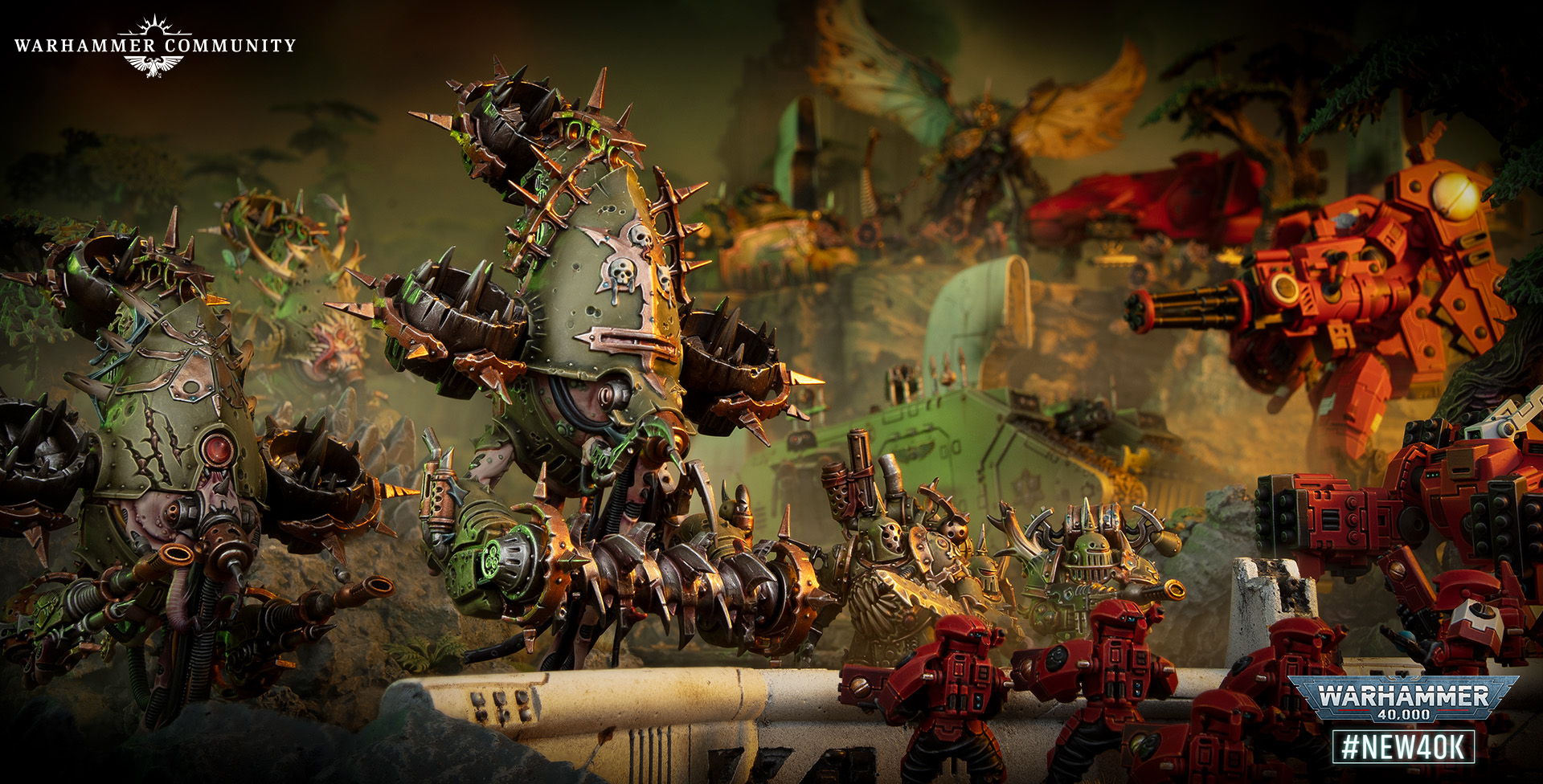
What it’s trying to do
Contagion Engines makes your daemon-corrupted Vehicles better at doing what Death Guard already want to do: get onto objectives, stay there, and grind the enemy down while your contagion weakens them.
When to leverage it:
-
Early game (Turns 1–2): Use your improved mobility and shooting reliability to claim mid-board space. Death Guard are normally slow, so anything that helps you keep pressure up while moving matters a lot.
-
Mid game (Turns 2–3): Time your “burst” moments: when you’re about to take a key objective, delete a key enemy unit, or swing a flank.
-
Late game (Turns 4–5): Vehicles that are still alive become scoring anchors. Focus on denying objectives and cleaning up weakened units.
Key tools explained:
Assault (ability): The detachment interacts with Assault to help you keep firing while moving. For a new player, the takeaway is simple: don’t “park and shoot” if moving gets you points—your tools help you keep damage output while repositioning.
Parasitic Woe-reaper (Enhancement): This upgrade can let up to three of your units heal after they successfully hit in melee. New-player tip: use it to keep your key pieces above “degraded” thresholds and to win attrition fights on objectives.
Bloodrust Deluge (Stratagem): This lets you “project” contagion effects onto a chosen target for one shooting attack, including -1 Toughness and (with Rattlejoint Ague) potentially worsening their Save. New-player timing tip: use this right before your biggest shooting activation (for example, when you absolutely need a tough target to drop this turn).
Helbrutes + Afflicted targets: The article calls out that Helbrutes add +1 to Wound rolls when attacking an Afflicted unit. New-player tip: if you can, set up contagion first, then commit the Helbrute into the target you most need to remove.
Common beginner mistake to avoid
Overextending a single Vehicle. Death Guard are durable, but isolated units still die. Move up as a layered wave so your opponent can’t focus-fire one piece without stepping into contagion range and counterpunch threats.
2) Flyblown Host (Infiltration and close-range pressure)
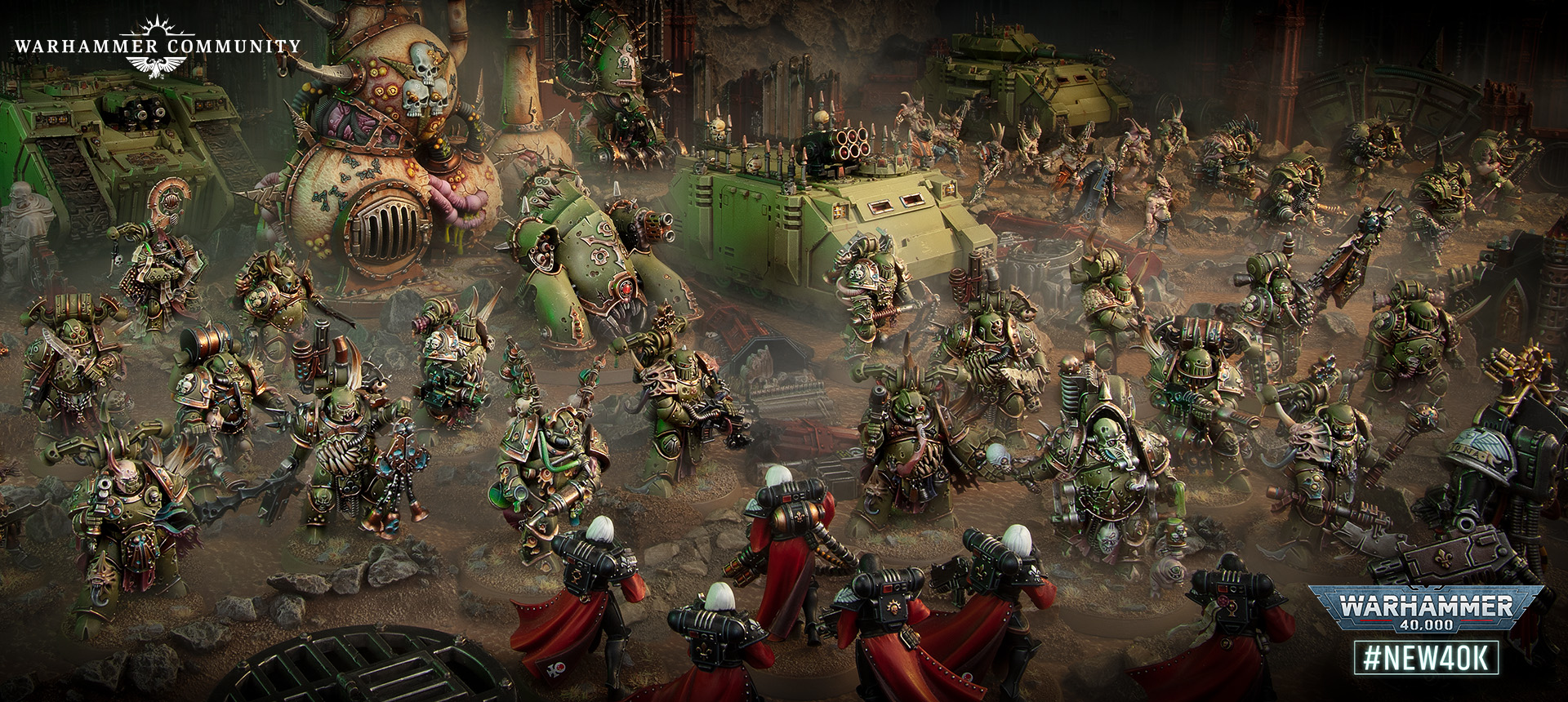
What it’s trying to do
Flyblown Host is about starting closer, getting contagion onto the enemy quickly, and making the opponent’s early turns awkward. The signature idea is: get Plague Marines into meaningful positions before the enemy can comfortably respond.
When to leverage it
-
Deployment: Plan where early pressure matters most: mid objectives, choke points, or angles that force the enemy to deal with you instead of executing their plan.
-
Turn 1: Use your forward presence to threaten contagion range quickly and force bad trades (the enemy must either fall back, commit resources, or accept being Afflicted).
-
When you expect to be charged: Flyblown Host can make charging you a mistake—set “traps” where the enemy’s charge results in them eating punishing close-range fire or losing tempo.
Key tools explained
Insectile Murmuration (Enhancement): Improves Plague Marines against enemies affected by Nurgle’s Gift. New-player tip: put this on the unit you expect to do the most fighting around objectives, because that’s where contagion is easiest to maintain.
Eye of the Swarm: If the enemy charges your Plague Marines, this detachment helps you punish that decision. New-player tip: you don’t always need to rush into melee—sometimes the best play is to hold position, let the opponent come to you, and win through efficiency and board control.
Close-Quarters (formerly Pistol): If you’re new, the practical takeaway is: getting tied up in melee doesn’t necessarily shut down all your shooting—some weapons still work at close range.
Common beginner mistake to avoid
Infiltrating without support. Forward units should have a purpose: scoring early, screening enemy moves, or setting up a turn-2 contagion squeeze. If you can’t explain what the forward unit accomplishes, deploy it safer.
3) Paragons of Putrescence (Character-led, flexible contagion play)
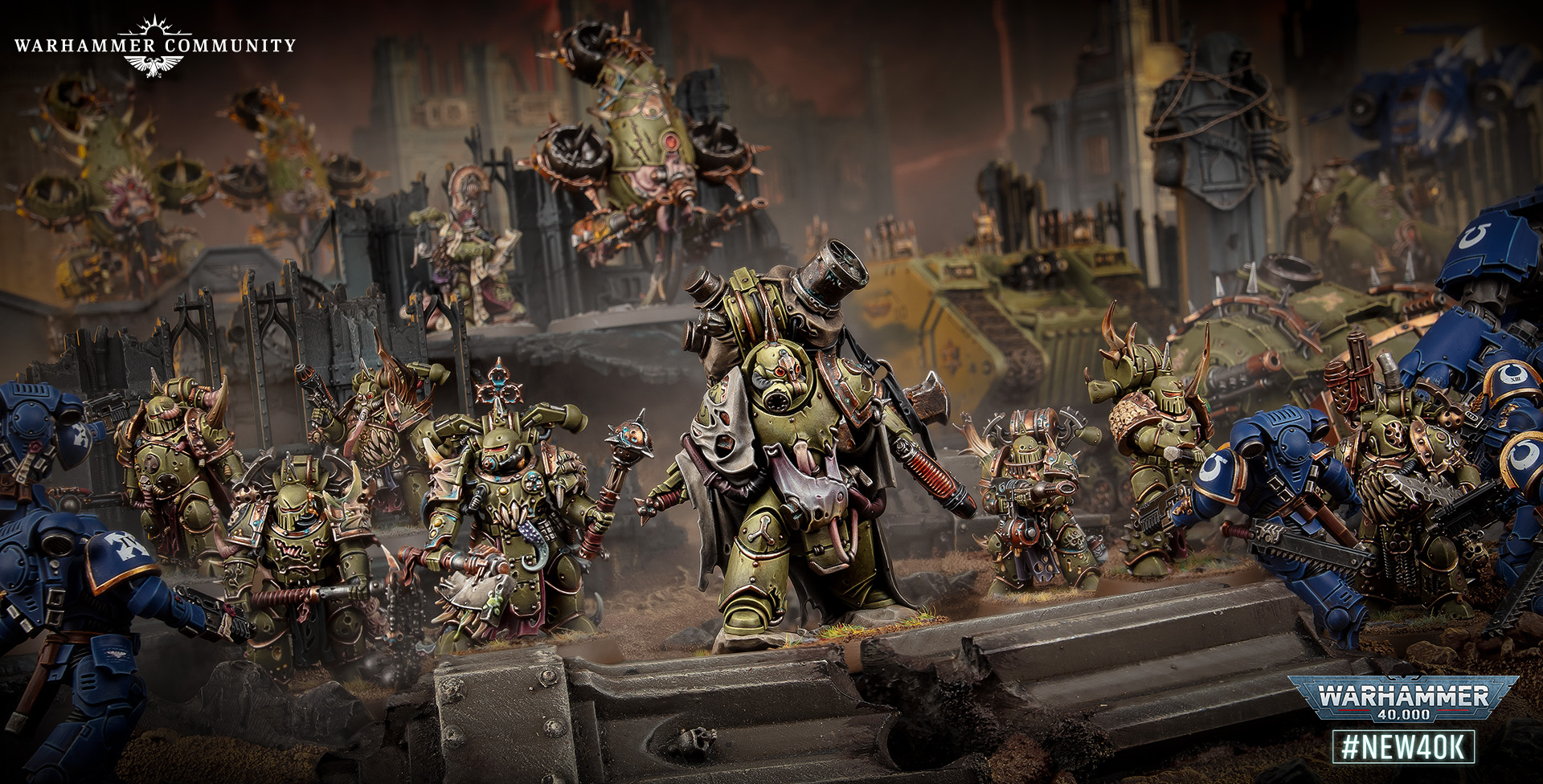
What it’s trying to do
This detachment makes your Death Guard Characters more impactful and increases the reach and flexibility of your contagion play—starting with a boost to Contagion Range and building into more “right tool for the job” options.
When to leverage it
-
At the start of the game: You normally choose between three plague options, and beginners often worry they’ll pick the “wrong” one. Paragons gives you ways to adapt when the board state changes.
-
Mid game: Attach Characters to the units that will be in the most important fights (usually around objectives). Your goal is to keep the enemy Afflicted as often as possible while your Characters provide buffs and pressure.
Key tools explained
Host of the Hybridised Pox (Enhancement): Lets you access the benefit you wish you had picked earlier—useful if the game pivots. New-player timing tip: save this kind of flexibility for the moment it swings scoring (for example, when lowering enemy OC would flip an objective, or when a defensive plague would keep your unit alive one more turn).
Anti-stealth style pressure: The article notes that hiding from these champions isn’t reliable—this is a reminder that contagion pressure can force opponents out of comfortable positions.
Common beginner mistake to avoid
Stacking Characters where they won’t matter. Put your best buffs where the game will be decided: mid-board objectives and key trades. A fully tooled Character sitting on a quiet back objective often doesn’t earn their cost.
Beginner combo idea (simple and practical)
The article points out that Flyblown Host + Paragons of Putrescence can work especially well: infiltrate Plague Marines close, attach Characters to them, and aim to have a large part of the enemy army inside your contagion aura by around turn two. If your format uses Detachment Points, you may even be able to add Contagion Engines for extra Vehicle pressure.
How to “leverage the changes” in real games.
-
Before the game: Decide what wins you the mission—holding mid-board, trading on objectives, or deleting a key enemy unit—and pick the detachment that supports that plan.
-
During deployment: Identify where your contagion can matter fastest (usually the mid-board) and plan how you’ll get there without isolating units.
-
Turns 1–2: Prioritize positioning + scoring over “maximum damage.” Death Guard win when the opponent is forced to fight you on your terms.
-
Critical moments: Use your big Stratagems/Enhancements when they change an outcome: flipping an objective, deleting a hard target, or keeping a key unit alive.